Marketing to Gen Z: how to reach them and other generations
Author:
Karina
Published:
Jun 24, 2026
Updated:
Jun 24, 2026
Reading Time:
10min
Gen X. Gen Y. Gen Z. Boomers. Zoomers. Millennials. Who are these people? How old are they, and how do you reach this audience?
I'm the kind of person who thought this system was too complicated to master and memorize, and here I am writing an article about it. 😂
Marketing to Gen Z and millennials is what I've been doing for most of my marketing career, and I decided to gather everything I know in one place. Plus, I want to add additional research and stats that will help you build your marketing strategy.
I will talk about different generations (mostly focusing on Gen Z and Y), what message resonates with them, what platforms they use the most, and how they compare to older generations.
I will also tell you how to build buyer personas and use them while creating a plan. If you are a marketer who's interested in that, stay with me.
- Who is Gen Z, and what do you need to know about them?
- Who is Gen Y (millennials), and what do you need to know about them?
- Gen Z vs. Gen Y vs older generations
- The channels that actually reach Gen Z
- What kind of messaging to use to reach Gen Z
- How to build audience personas
- FAQ
Who is Gen Z, and what do you need to know about them?
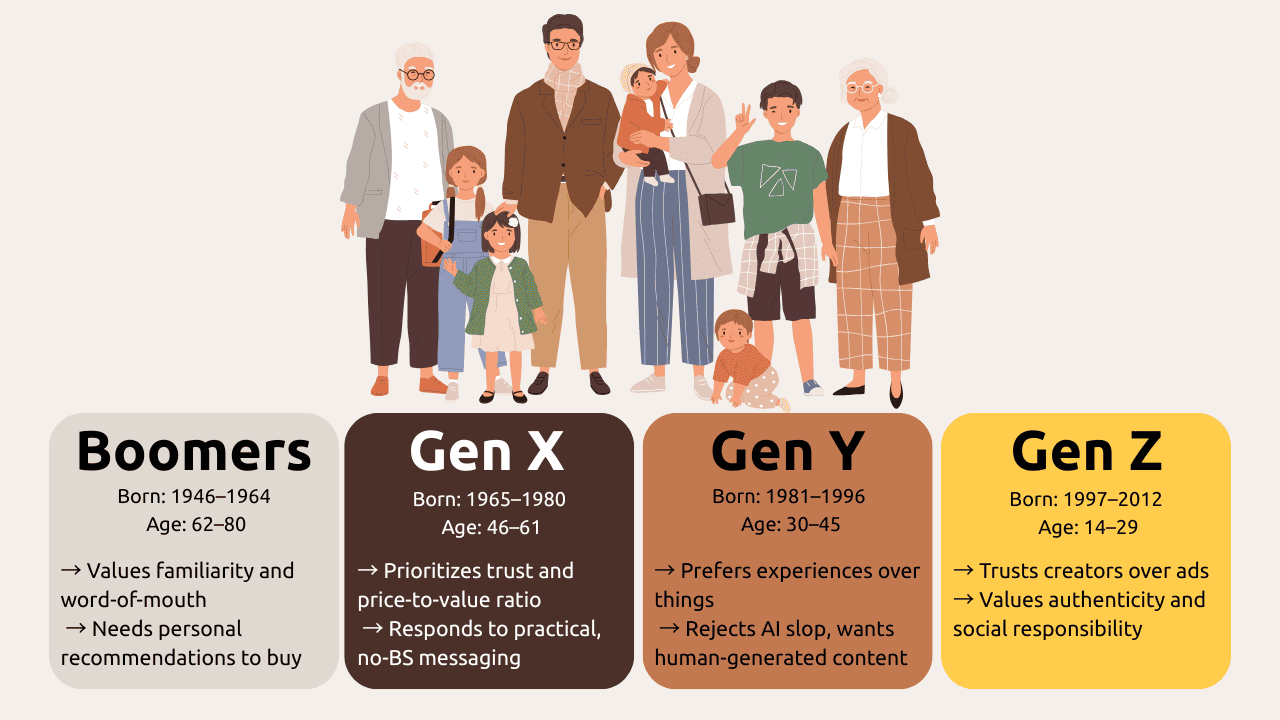
Generation Z was born between 1997 and 2012 (these dates may vary slightly depending on the resource). It estimates roughly 2 billion people worldwide, approximately 25% of the global population—and it’s the largest generation in history.
Gen Z is even larger than millennials and will likely be the largest generation ever. They're also the most ethnically diverse—over 50% self-identified as racial and ethnic minorities in 2024.
Some things to keep in mind about Gen Z:
→ They are digital natives. They grew up with smartphones and social media. That means their perception and expectations of content are different compared to other generations.
→ They filter content faster than any previous generation. Gen Z customers are very selective when it comes to content, and they will only consume what resonates with them.
→ They value authenticity and transparency. They believe in social responsibility, which each content creator has towards their audience.
→ They are also an influential generation. That means they might trust a single person who recommends the product more than a mass advertising channel.
Who is Gen Y (millennials), and what do you need to know about them?
Generation Y (better known as millennials) was born between 1981 and 1996. There are approximately 1.8 billion millennials worldwide, and in the US alone, they represent 72–74 million people.
As of 2026, millennials are 30 to 44 years old. Many are well into their careers, raising kids, and making household purchasing decisions.
Unlike Gen Z, millennials didn't grow up with smartphones in their hands. They adapted to technology as it evolved.
Some things to keep in mind about millennials:
→ They value experiences over things. Millennials would much rather spend money on experiences than material products. They want to see how the product can be used in their life and make it better, not just what it is.
→ They do not want to consume low-effort content. 44% have already unfollowed or muted brands that post content that feels like AI slop. That means millennials value personality and real-life content.
→ They care about brand values. Loyalty needs to be earned, and it can be easily lost if a brand doesn't deliver.
Gen Z vs. Gen Y vs older generations
You need to understand the generational differences in order to target them properly. If you're running campaigns for mixed audiences, you should consider using different channels and personalized messaging for each one of them.
I know it’s not always possible, but it’s definitely worth considering.
How each generation discovers brands
I will give a quick overview of the most used channels by generation. Even though these are common patterns, there are always exceptions.
Gen Z spends most of their time on TikTok, Instagram, and YouTube (including Shorts). They rely a lot on creator recommendations. If you want to capture this generation, you should use Meta Ads, influencer marketing, and UGC (user-generated content).
Millennials use a lot of different platforms and switch between them. The major ones are Instagram, Facebook, Google Search, and email. Meta Ads still work here, but you’d need to add Google Ads and email marketing to the mix.
Gen X is a little bit more "old-school" and still uses some traditional media (TV, radio, print) along with Facebook, email, and podcasts. Here you’d need to find a good platform mix that would reach the audience but wouldn't be overwhelming at the same time.
Boomers (and previous generations) obviously still use traditional media, along with direct mail, in-store campaigns, and Facebook.
How each generation makes purchase decisions
Gen Z values social proof and cares about values alignment. They also like convenience and speed. They appreciate in-app checkouts and Apple Pay while shopping online. If you want to make them buy, give them social proof and make it as easy as possible to make a purchase.
Millennials are more into reviews and comparison content. Brand reputation is extremely important for them as well. Think about how to make your product stand out on the market. Implement loyalty programs and stay consistent with your promises.
Gen X’s priorities are trust, price vs. value evaluation, and convenience. You need to showcase why your product is worth the money, how they will benefit from it, and make it convenient for them to purchase.
Boomers value familiarity, personal recommendations, and quality signals. Word-of-mouth marketing is important for them. They need to know that someone they know has vouched for this product.
The channels that actually reach Gen Z
Obviously, there are many marketing channels (including all social media platforms) that you could use to reach Gen Z users. I want to talk about the most popular ones and give you some practical marketing tactics.
TikTok and short-form video
Platforms like TikTok are best known for their short-form video content and speed of use. Gen Z uses TikTok as a search engine, discovery platform, and shopping tool.
On this platform, consumers value authenticity and realism over polished content. UGC and influencer marketing would work great here.
It’s very important to pick an influencer who can promote your product or service organically and sound genuine. If you plan to promote your brand on social media yourself, make sure you concentrate on usage examples and how your product makes people’s lives better.
Instagram and visual storytelling
If you want to reach the Gen Z audience through Instagram, you definitely need to build your brand’s presence here. You need to tell your brand’s story using reels, stories, and carousels.
People are more willing to buy if they are familiar with your brand and understand your values and product's real worth. I’d say Instagram serves more as a discovery stage. The more you connect with people, the more they are willing to buy.
YouTube, Snapchat, and the rest
YouTube is made for long-form video content and fits best if you want to showcase reviews and tutorials. It won’t work for every company, but it’s something that you can consider using in the mix of social channels.
Snapchat works best for real-time and ephemeral content. I've personally never used Snapchat as a marketing channel, but I know that some companies are pretty successful there.
You don’t need to be present on every single social media platform from this list to reach Gen Z. Choose 1-2 main channels first and expand later if you have a need and resources to do so.
What about email, search, and traditional channels?
Gen Z still uses these channels, but not as actively as other generations. Email serves more of a transactional role for Gen Z. By that I mean using this channel for receipts, confirmations, discount suggestions, etc.
It can still be used for B2B outreach campaigns, and age doesn’t matter that much in that case.
Google search is also still in use for comparison or validation; it is still a very popular place to search for local businesses. Other traditional marketing channels like TV, OOH (outdoor), print, and radio can be used for an awareness campaign if your creative is catchy and fresh.
What kind of messaging to use to reach Gen Z
In my opinion, there are three key things that are important when it comes to writing messaging for Gen Z.
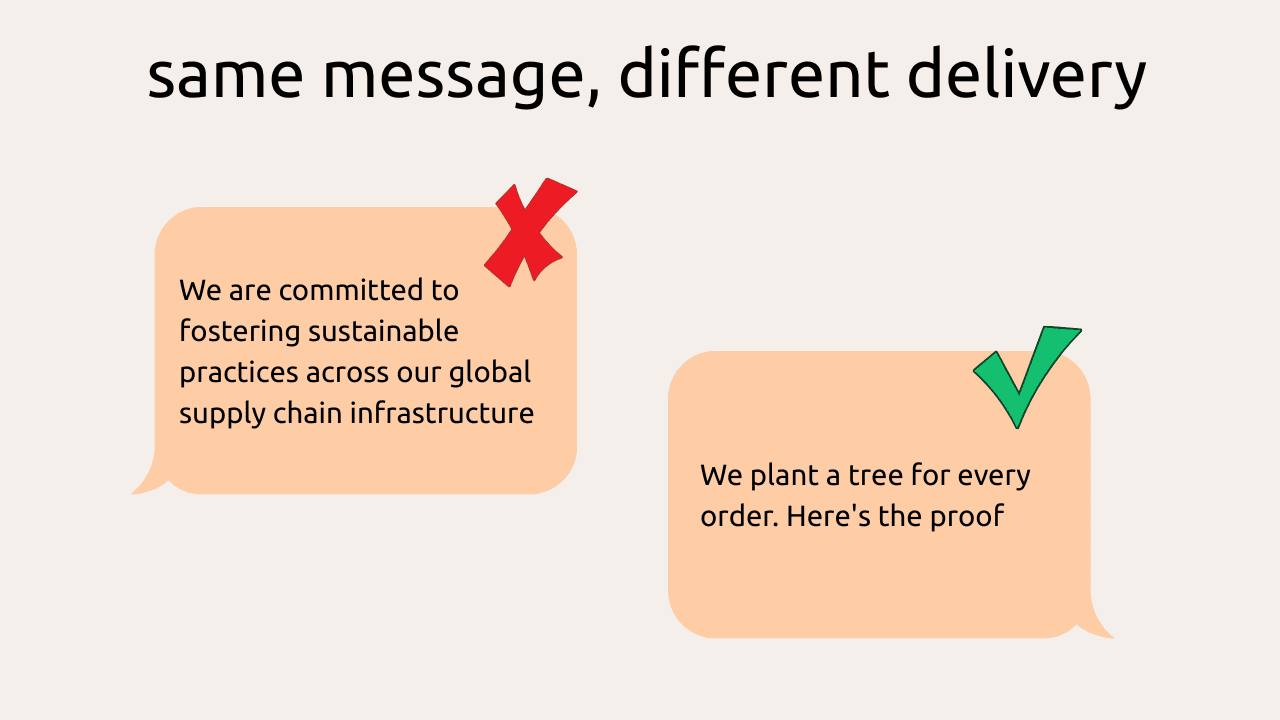
🟡 Use plain and simple language. Gen Z doesn’t respond that well to corporate or AI-generated text (when it is not optimized). They value honesty and transparency.
🟡 Brand values matter. Gen Z likes companies that are environmentally conscious, participate in charity programs, and help people in any way they can. The hard part here is not to overdo it. It should feel genuine.
🟡 Content should be short, visually catchy, and interactive. This generation is very selective when it comes to content. If you don't catch attention in the first three seconds, your content will be scrolled past.
How to build audience personas
First, let me tell you why building audience personas is important.
When you build personas (do not confuse them with ICPs), you analyze data, conduct customer development interviews, and do a lot of research to identify your ideal audience’s motivations, drivers, and purchase reasons.
That will help you create effective marketing, including writing your messaging, building a video brief, and identifying the right marketing channel.
Ideally you would create ICPs AND personas. That would maximize your chances for a successful marketing campaign.
Why "Gen Z" isn't one audience
Imagine a 19-year-old student who likes to spend time with friends and party and a 28-year-old with a career in tech space who’s looking into starting a family. Their needs and interests will be wildly different.
By the way, I know it’s an absurd example, but I think it proves the point just fine.
In order to build a persona, you need to differentiate not only by age groups but also by sub-segments like interests, life stage, content interests, purchase triggers, and anything you consider valuable for reaching your audience.
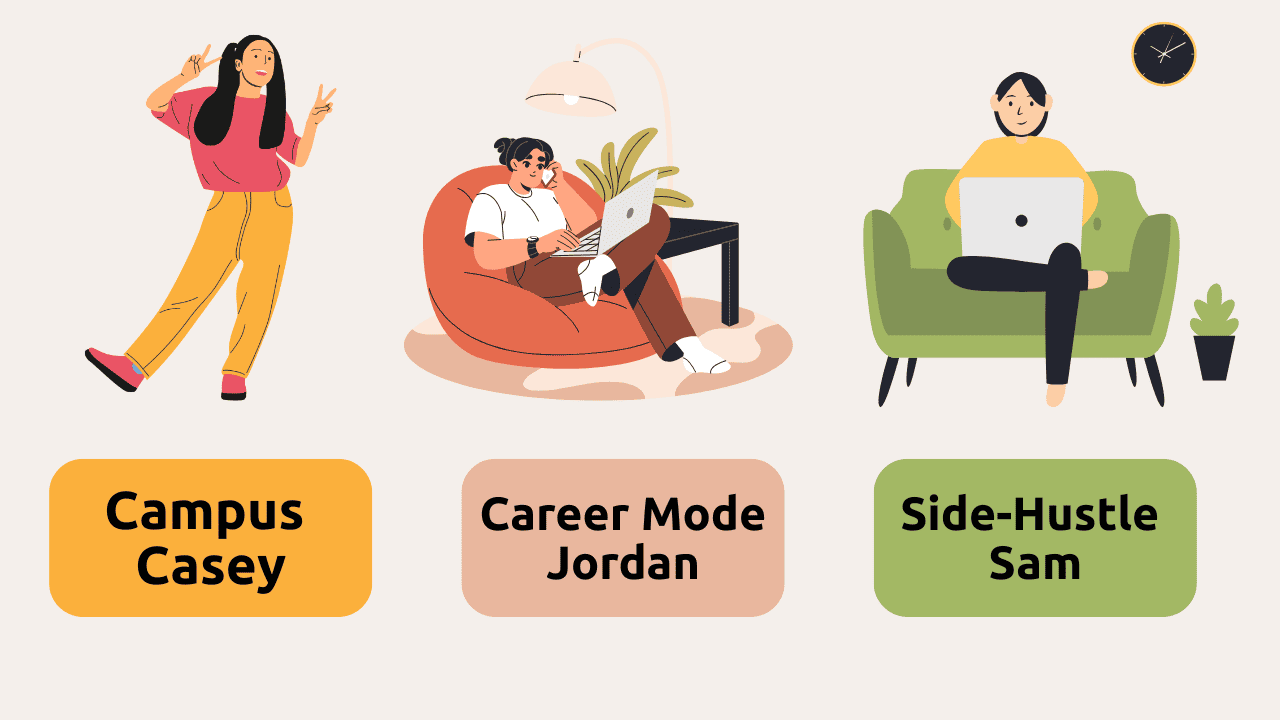
I also suggest giving them memorable names that spark associations. Let’s look at some examples.
*Please note that your personas should be based on real data and cases; this chart serves only as an example and is filled with made-up data.
I hope all of this will give you a better idea of how to reach your audience and use the most effective way to do so.
FAQ
Disclosure: Some links in this article may be affiliate links. If you choose to make a purchase through them, Your Marketing Bowl may earn a commission at no extra cost to you.
The content on this site is for informational and entertainment purposes only and should not be taken as financial advice. For full details, see the disclaimers section.
The content on this site is for informational and entertainment purposes only and should not be taken as financial advice. For full details, see the disclaimers section.

Hey there! I'm Karina! I love marketing and everything about it. I've been working in marketing in Eastern Europe, Sweden, and now in Santa Barbara, CA. I hope you gonna like it here.


Subscribe for marketing advice
I'd actually give a friend
Join our mailing list and never miss a story.
No AI, no BS!