Marketing channel strategy from someone who tried them all
Author:
Karina
Published:
Jun 11, 2026
Updated:
Jun 11, 2026
Reading Time:
10min
When I first started my marketing career, the only types of marketing channels I knew were Meta Ads and Google Ads. I also thought that if you understand and master these two channels, you become a marketing guru. 😂
I was so wrong.
Obviously, I knew that some companies advertise on billboards, in magazines, on radio channels, but it felt extremely confusing, and I knew very little about those areas.
Over the years of my marketing career, I learned that these channels are no more confusing than any other digital channels, and they can significantly contribute to your marketing strategies, just in a different way.
Now I’ve participated in placing ads in LAX, the LA Business Journal, various radio channels, and on one of the most popular US TV networks that gathered hundreds of millions of impressions combined.
I break down all marketing channels into two main categories: digital and physical (not online). I don’t claim that’s the right way to do it, but I feel like it makes sense, and it’s easier to differentiate. So here’s how I see it.
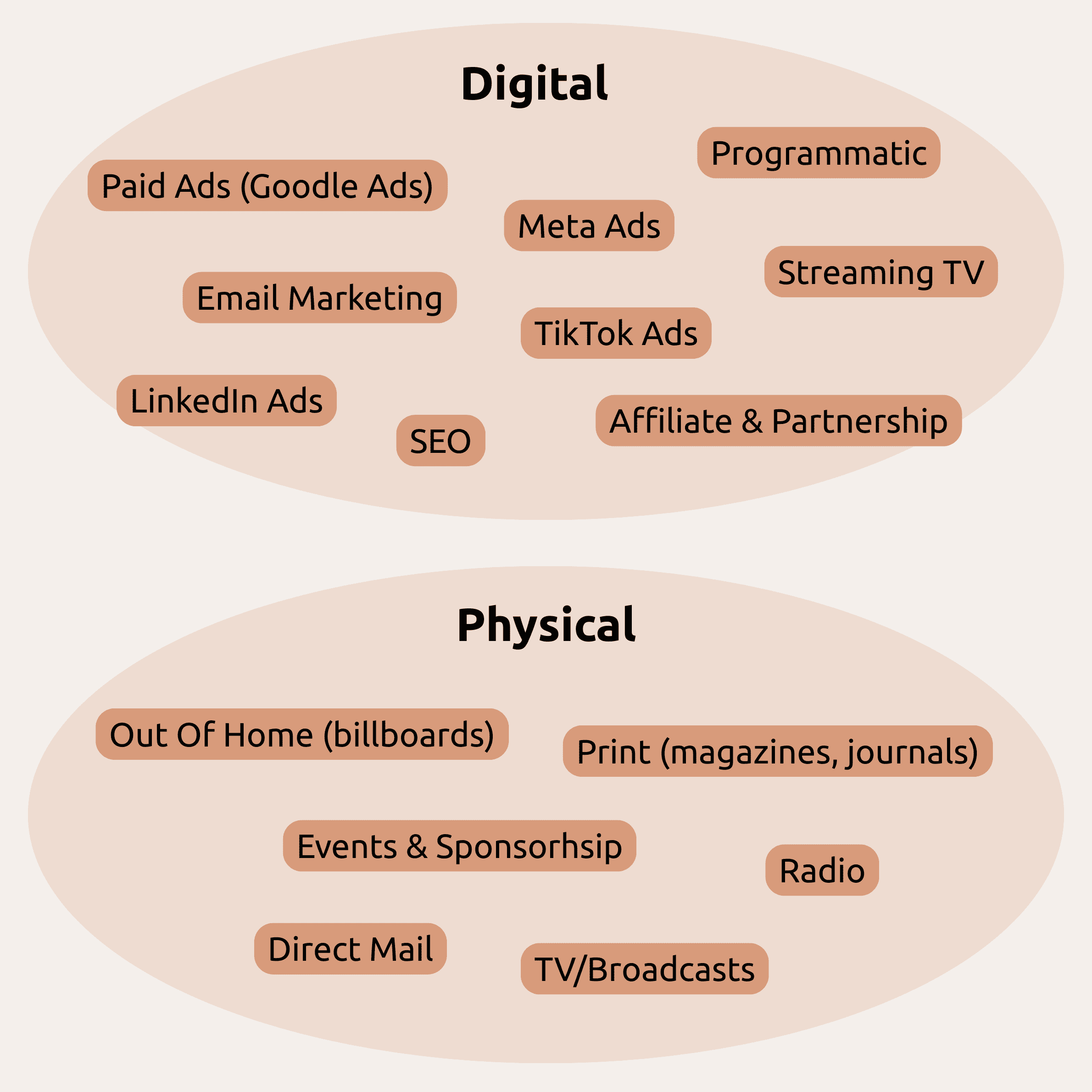
I want to give you an overview of these marketing channels and help you navigate through them. We will also talk about how to pick one or combine multiple channels at the same time to achieve your goals and reach your target audience.
- Digital marketing channels
- Physical marketing channels
- How to choose the right channels
- How to combine multiple channels
- FAQ
Digital marketing channels
Digital marketing channels are everything you can access and see online, such as social media, search engines, email, and streaming services with ads. Let’s go through the main categories and discuss what each one of them includes.
Paid search and social ads
This category contains Google Ads, Meta Ads, TikTok Ads, and LinkedIn Ads.
The main difference between Google Ads (Paid Search/PPC) and social media ads (Meta, TikTok, LinkedIn) is that, in the first case, you are targeting people who are already searching for a solution and may be looking to buy, while the second option interrupts people and creates demand.
That is a huge difference in approach, and the tactics for each should be built accordingly.
Google Ads → meant for targeting high-intent keywords that people already search for
Meta Ads → meant for broad targeting and retargeting
TikTok Ads → meant for younger demographics and creative-led campaigns
LinkedIn Ads → meant for B2B, where you can target by job title, company size, industry
That doesn’t mean you cannot target a younger audience and be creative on Meta Ads or on LinkedIn; it just means each platform excels at its own thing.
Obviously, each digital platform has its own Ad Manager and learning curve, but the core logic is the same for all of them. You need to prepare your audience, creative, and budget, and work on optimization as needed.
This is where the majority of companies start their marketing efforts since the barrier to entry is low, and you can launch with almost any marketing budget.
It is also relatively easy to track ROI (return on investment) when you run ads using these channels.
You can check out some inspo here.
Email marketing
This channel can be broken down into two main categories: cold email outreach (reaching people who don't know you) and warm email marketing (newsletters, sequences, nurture flows to people who opted in).
This is also one of the few digital channels where you “own” your audience (for lack of a better word). You already have a list of contacts who are familiar with you or your company (in the case of a warm outreach); you are not “renting out” another platform’s users.
I have an article about 10 marketing newsletters you should follow if you want to see some great examples.
You will be successful in email marketing if you can combine personalization, segmentation, and timing in the most efficient way. Email marketing can work as a standalone channel or as a layer within the broader marketing funnel.
You can scrape contacts and reach out to people who don't know you, or nurture potential customers who already follow your newsletter or have downloaded your PDFs.
This channel itself can contribute to almost all marketing campaigns.
Content marketing and SEO
I decided to put these groups together because they complement each other. Content is what you create, and SEO (Search Engine Optimization) is how people find it organically.
Main content types:
→ Blog posts,
→ Videos,
→ Podcasts,
→ Social media content, etc.
This marketing channel will compound over time and show results later. What makes this an effective channel is that your in-depth articles can rank on the first page of Google years after they were published (you do need to update them from time to time).
Longer-form content also builds more credibility for your brand, and people grow attached to your company and start to understand it better.
One example is this blog of mine. I share my thoughts and experiences in long-form content where I can express myself in a better way and get readers to know me better.
Programmatic and streaming TV
These digital channels probably need a bit more explanation than others.
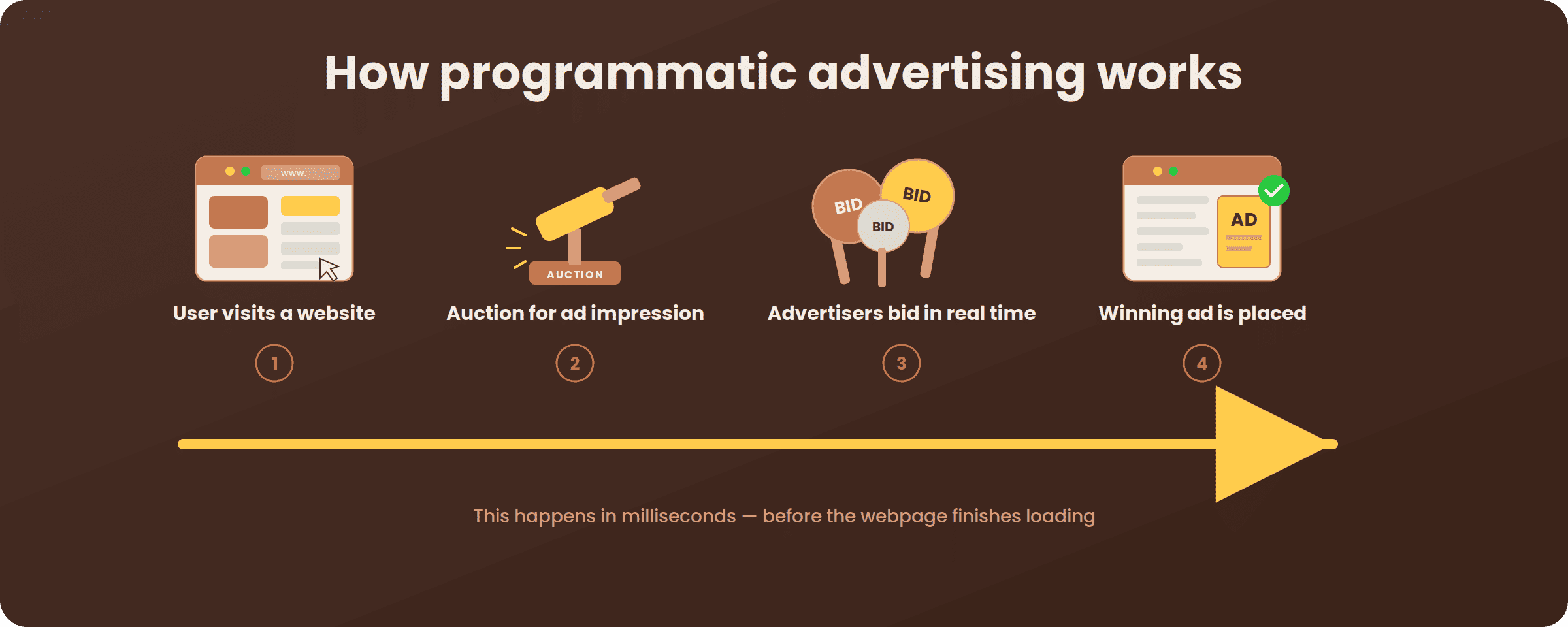
Programmatic is automated and targeted ad buying across websites, apps, and connected TV. In order to get your ad placed, you're bidding in real time through platforms like The Trade Desk, DV360, Amazon DSP, or others.
These ads are also relevant to the context of the website or platform where they are shown (most of the time). That means the ad will usually align with the website topic.
Streaming TV (CTV) is the modern version of TV commercials; these ads can be placed on platforms like Hulu, Peacock, YouTube TV, Netflix, etc.
These platforms also allow you to target specific audiences or be shown in specific shows or movies. I feel like streaming TV fits better for awareness campaigns since you cannot interact with an ad, unless you have a QR code in it.
This digital channel can get really expensive, too; placements there usually aren’t cheap, and they often have a minimum budget you need to meet for your ads to be considered for placement.
That being said, I still think it can be a great advertising channel, and it can significantly contribute to an effective channel strategy.
Affiliate and partnership marketing
How does affiliate and partnership marketing work?
That’s when you're partnering with other people or businesses who promote your product or service in exchange for a commission or mutual benefit. This benefit can take many forms, such as recognition, profit, customer base exchange, etc.
Affiliate marketing is essentially when someone recommends your product in one way or another (through social media platforms, a website, or other forms of content) and gets a cut of sales. Co-marketing partnerships are when two brands collaborate on a campaign in order to combine their efforts and get the most out of it.
Affiliate and partnership marketing works best when there's genuine audience overlap, and the campaign is done organically.
That doesn’t mean that the partner doesn’t matter as long as your audiences overlap. Choosing the right and trustworthy partner is a huge part of success. I had experiences in my career when the wrong partner didn’t follow the agreed-upon steps, which undermined the whole campaign.
Adobe's article talks about other partnership best practices that you might consider here.
Physical marketing channels
Advertising channels in this category are something that would have been considered 'traditional marketing channels' 10 years ago. You do not need to go online to see them.
Out-of-home (OOH)
Out-of-home advertising is not just billboards; it’s also bus stops, subway ads, airport displays, digital screens in malls, wrapped vehicles, and building murals. Pretty much everything you see when you get out of the house. 😂
It mostly serves to build awareness around the brand or product. One important factor for this type of marketing placement is the frequency with which your ad will be seen by the same person. The more times somebody sees it, the higher the chances of memorizing a brand.
This type of placement can be used by any company if you want some creative ways to catch attention. For example, vibe.co is a SaaS company for streaming TV advertising, and that’s the ad they came up with. That for sure catches attention. The company's name is simple enough to memorize and Google later.
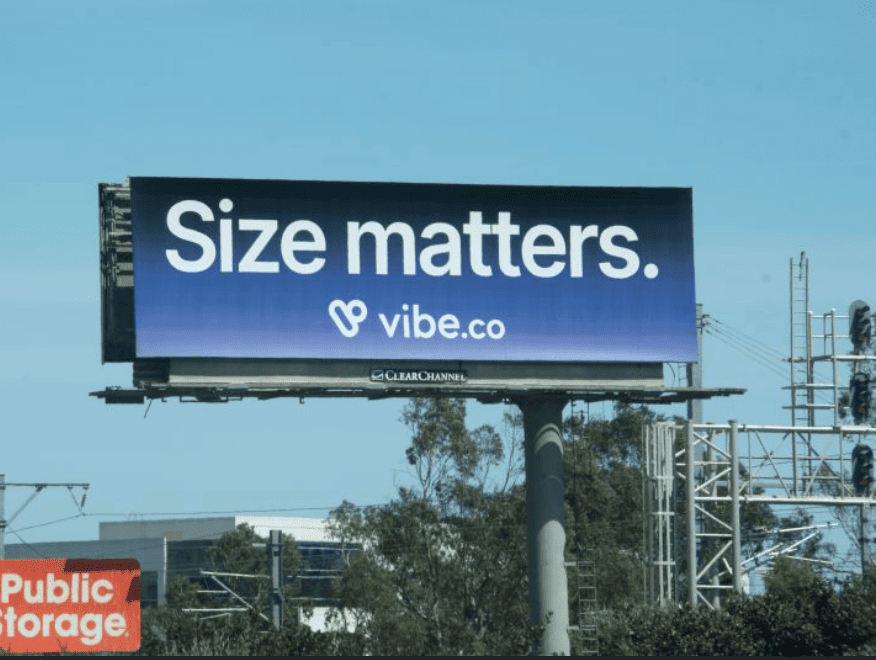
As you can see, the marketing message here is creative and strong. I also know that this particular company uses multichannel marketing, so it's only one of the various marketing channels that they work with.
The caveat for this placement is that the only channel performance data you will be able to get is the number of impressions. For some locations, you might get some additional audience segmentation, like all adults or the Hispanic audience in LA (if you want to place your ads in Spanish), but that won’t be available everywhere.
There are studies you can conduct to determine whether your product has become more recognizable and to measure the campaign results, but they can be costly and not always accurate.
A not-so-obvious thing to consider is safety. If you are placing your ad somewhere on the freeway with high traffic volume (like LA or NY), make sure your banner does not attract TOO much attention (yeah, I know how weird that sounds). You do not want to cause any traffic accidents.
Print ads
Print ads were considered one of the traditional channels some time ago. The variety of print ads is quite wide, including magazines, newspapers, journals, trade publications, inserts, catalogs, etc.
You might think that this marketing channel is dead. I mean, who still reads newspapers and magazines?
Believe me, some people still do. First, you need to understand if your audience is the journal-reading type or not. Next, you just need to find the right publisher whose main audience will overlap with yours.
People still look through journals while waiting at the doctor's office or sitting in the hotel lounge. Some people still buy magazines they're interested in (like business journals) or are willing to explore interesting reading opportunities.
So it can still be considered a successful channel if you use it right.
Look at this great example of an Adidas double-page spread.

Radio and podcasts
Radio and podcasts are the only audio advertising channels. You need to understand how to work without a visual and how to make people remember you and search for you after listening to the audio.
Radio is still quite popular, especially in the United States, where you need to commute by car almost anywhere, and traffic jams make you spend a lot of time in the car.
A podcast is the modern version of radio. Ads there can be pretty effective, since the audience typically has a strong connection with the podcast hosts they listen to regularly.
The key is to find a channel where your ad looks natural and your product is genuinely recommended.
TV/Broadcasts
Traditional broadcast TV — network and cable. This is the original mass-reach channel, which is still unmatched when it comes to reaching as many people as possible — think Super Bowl ads.
I know that running an ad during the Super Bowl costs millions of dollars, but some local TV networks can be surprisingly affordable.
The buying process here is entirely different from the digital platforms, though. It is not a self-serve platform, which means that you need to contact vendors to secure the spot.
TV also has very strict guidelines regarding the video format and quality. That might be a problem for some companies that do not have professional production.
Direct mail
This is all physical mail — postcards, catalogs, letters, packages.
There is a huge change that I’m seeing: direct mail has made a comeback, because everyone moved to digital, and physical mailboxes are less cluttered now.
It would work well if you're a real estate agency, an e-commerce brand, or any business with a physical location where customers can come in.
The downside of it is the production cost and the need for a mailing list (you should either have one or buy it).
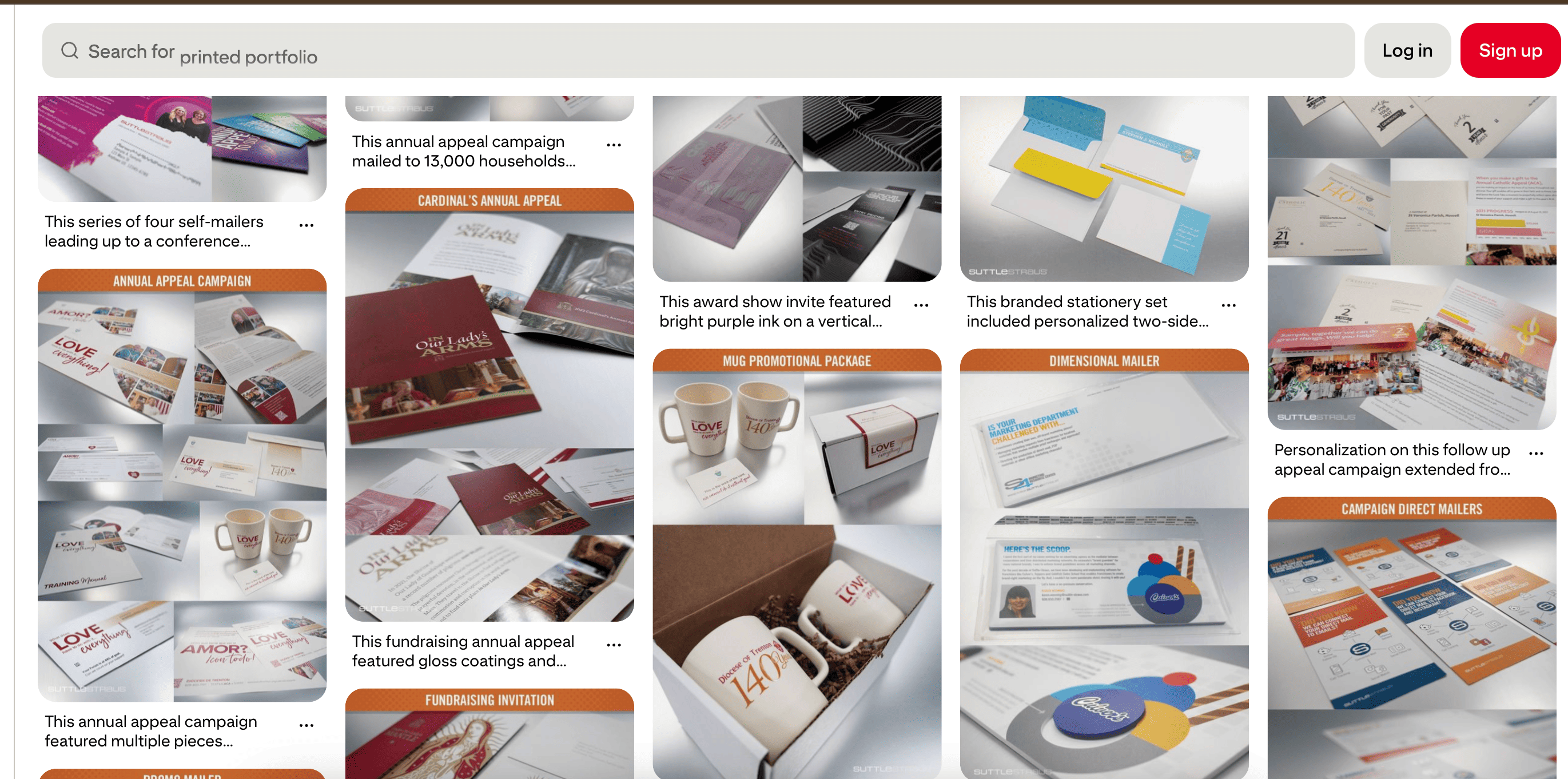
There is a whole Pinterest board with 140 ideas for direct mail campaigns if you wanna take a peek at some examples.
How to choose the right channels
Choosing the right marketing channels is really tough because it depends on many factors. You need to consider your niche, budget, and goals.
I will try to give you a couple of simple frameworks you can follow to decide on your marketing plan.
Let’s break it down by goal first.
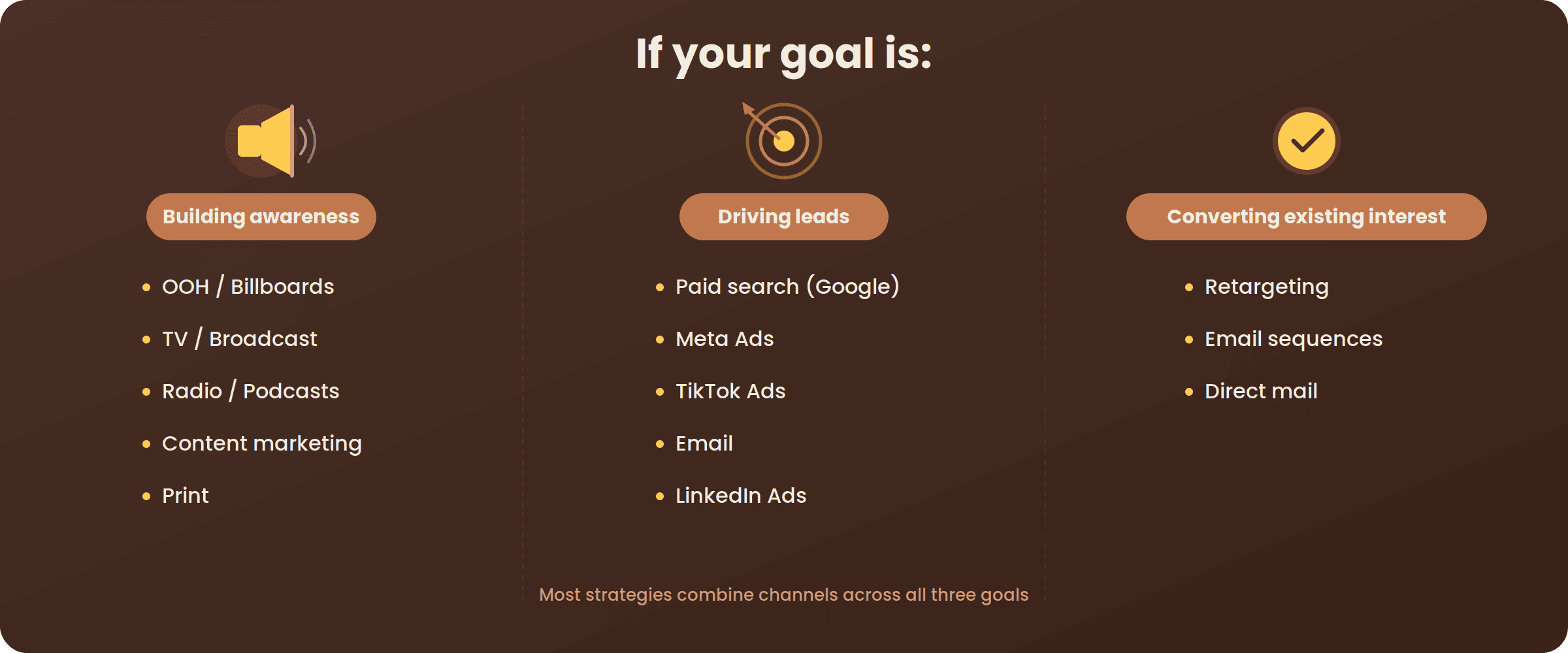
Very important note: this infographic reflects the main purpose of each channel, but it doesn’t mean that podcasts can’t drive leads or that you can’t build awareness using Meta Ads. Of course you can.
It’s helpful to understand that if you have the possibility to use multiple channels, you should keep in mind the main purpose of each one, but if your options are limited, you can still make it work with the basic digital channel set.
Every one of us is limited by budget in one way or another, so you need to know which channels require more spending. Obviously, you can adjust your spending in every channel, but for some of them, a very low budget just won’t show any significant results.
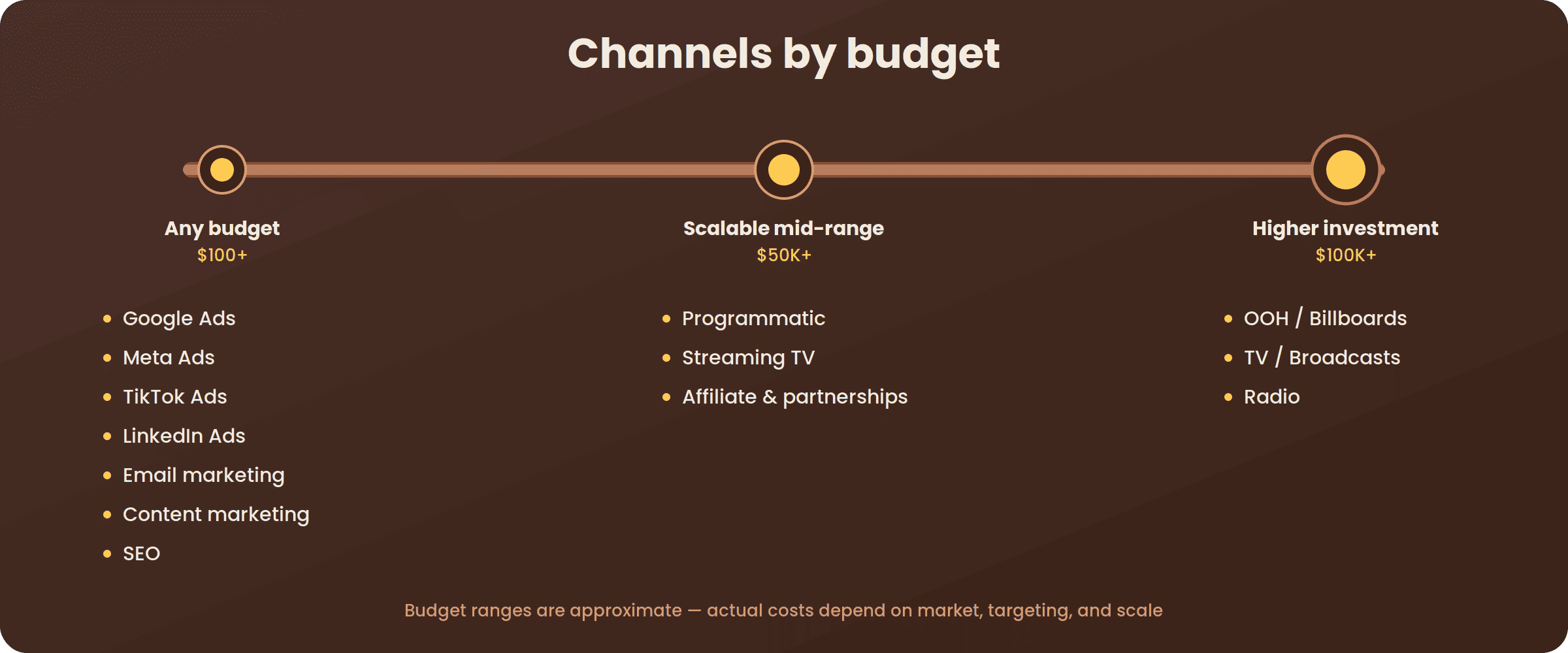
You should also consider your niche when you pick a channel. B2B leans toward LinkedIn, email, trade publications, and events. B2C leans toward Meta, TikTok, OOH, and streaming TV. But again, it is not set in stone, and you can be creative with your campaigns.
To sum it up, consider your marketing objectives, channel effectiveness for your specific niche (what will drive growth), and budget availability. This will help you build an effective marketing plan.
How to combine multiple channels
In order to create an effective marketing channel strategy, channels should complement each other and be a part of a strategically planned funnel (awareness → consideration → conversion).
Here's an example of a multi-channel strategy: you publish SEO content that brings in organic traffic, capture emails with a free template, then you nurture those leads with a short email sequence, and retarget the ones who didn't convert with Meta ads pointing to a demo page.
The options are limitless here. You can also use all of the channels available to lead to the same place (could be a landing page). That way, you will be able to reach a broad audience of different ages and social groups (if that’s your goal).
I'd recommend starting with 1–2 channels first that meet your goals and budget, and you can absolutely combine digital and traditional channels. When you master these channels, you can move to expanding even further.
FAQ
Disclosure: Some links in this article may be affiliate links. If you choose to make a purchase through them, Your Marketing Bowl may earn a commission at no extra cost to you.
The content on this site is for informational and entertainment purposes only and should not be taken as financial advice. For full details, see the disclaimers section.
The content on this site is for informational and entertainment purposes only and should not be taken as financial advice. For full details, see the disclaimers section.

Hey there! I'm Karina! I love marketing and everything about it. I've been working in marketing in Eastern Europe, Sweden, and now in Santa Barbara, CA. I hope you gonna like it here.

Related Blogs

Subscribe for marketing advice
I'd actually give a friend
Join our mailing list and never miss a story.
No AI, no BS!