How to generate B2B leads in 2026?
Author:
Karina
Published:
Jan 28, 2026
Updated:
Mar 4, 2026
Reading Time:
15min
- What is B2B lead generation (and why it’s hard today)
- Buyer personas
- Lead stages explained: from visitor to customer
- B2B lead generation strategies that work
- LinkedIn as a B2B lead generation channel
- Outreach-based lead generation
- How to choose the right B2B lead generation mix
- Measuring B2B lead generation success
What is B2B lead generation (and why it’s hard today)
I guess if you are looking for B2B lead generation ideas, you know what it means, but I wanted to provide a clear explanation just to give people more understanding about this topic.
In simple words, B2B lead generation is the process of identifying your potential customers (leads) and using different marketing strategies to attract them to use your products or services.
That sounds simple enough, but practice shows that it’s getting more and more challenging to attract potential customers. There are multiple reasons for that; some of them are:
→ Longer buying cycles
→ A lot of digital noise and banner blindness due to the number of ads
→ People are tired of constant messages and cold emails from strangers
That doesn’t mean, though, that you should stop doing outreach campaigns. It’s simply a signal to reconsider how you want to do that and what would be most beneficial for your business.
Buyer personas
Before we dive deeper into the actual lead generation tactics, I want to give you some foundational concepts to help you better navigate in B2B terminology. This information is also crucial for building a successful outreach strategy.
What a B2B Buyer Persona Is (and Isn’t)
A buyer persona is essentially your ideal customer, somebody who has the problem that your product or service can solve and is willing to potentially buy a solution to that problem.
When you are building your ideal customer profile, I’d suggest creating a Google Sheet or a table in any other place you like and breaking it down by these categories:
1. Who (occupation, job)
2. Needs (what the person needs right now)
3. Pain points (what problems/issues the person is having)
4. Goals (what the person wants to achieve)
5. Characteristics (anything special worth mentioning)
6. Challenges (what obstacles the person is facing now)
7. How does he/she solve those challenges at this moment
8. What can your company do to help with those challenges
9. Common objections
10. Where to reach this audience
11. What to offer to this audience and how
Let me give you an example. Let’s say a SaaS company that helps with documentation, invoicing, accounting, keeping everything in one place, and streamlining the whole billing process is looking to attract new customers. Here’s how an ICP could potentially look:
This will give you a clear picture of who you are looking for and where to find them. I found an interesting Miro template that could help you visualize everything. You can check it out if you want.
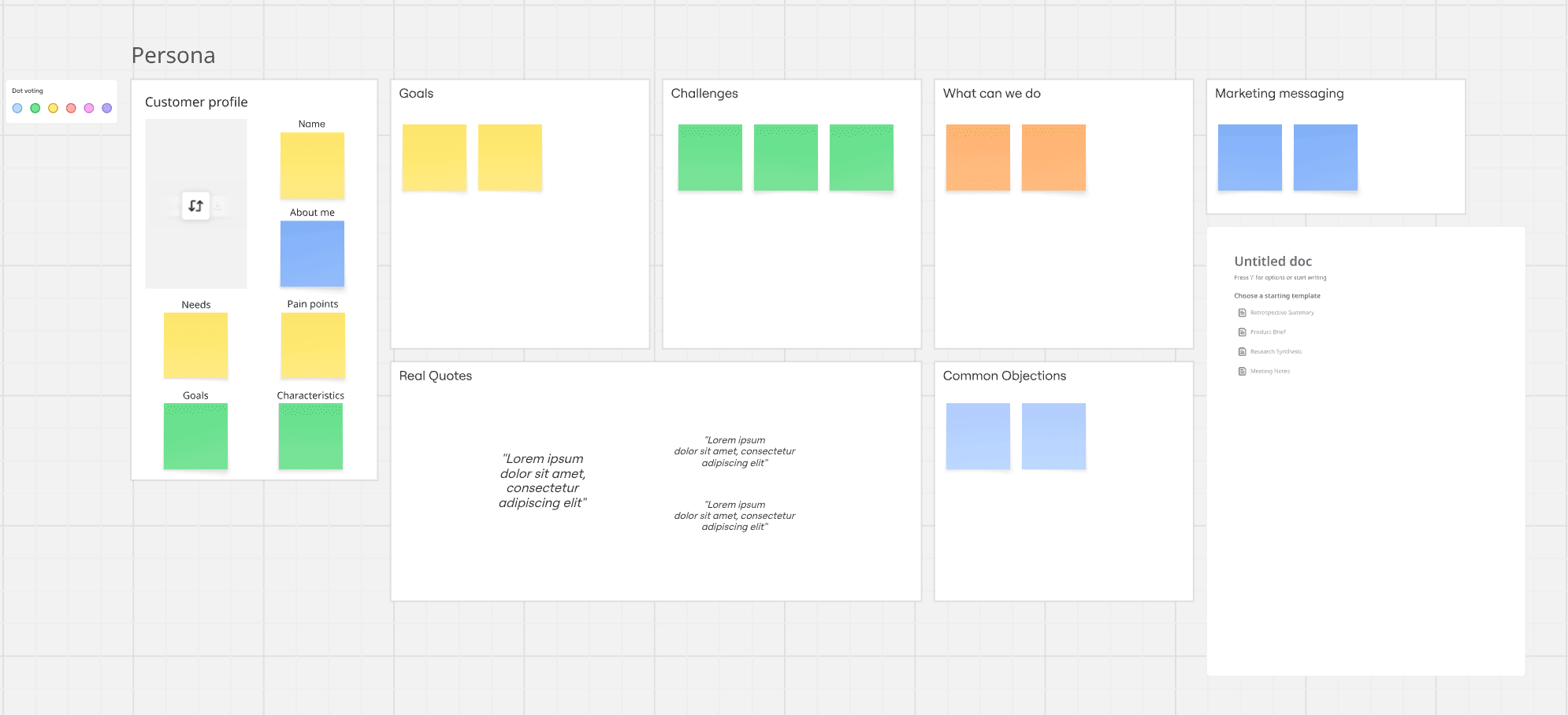
Note that sometimes you need to use completely different channels and marketing strategies to reach different audiences, because personas respond to different channels.
Lead stages explained: from visitor to customer
Another important matter that cannot be ignored is the lead stages. That will help you navigate through the funnel and see where each potential client is in their journey.
Those stages are:
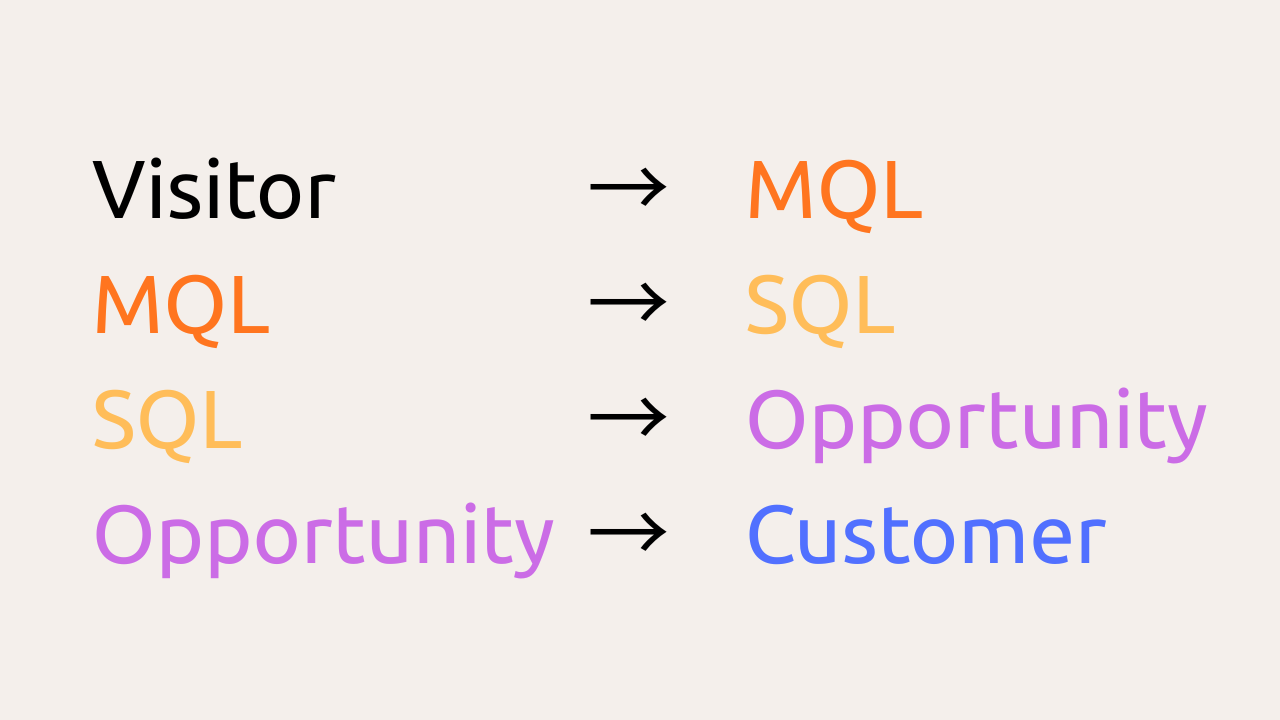
A visitor is someone who lands on your website, sees your ad, or comes through your content. MQL (marketing qualified lead) is a lead that matches your ICP (ideal customer profile). SQL (sales qualified lead) is a lead that’s interested in getting to know your product better.
The opportunity stage is where you present, showcase, or talk more about your product; in other words, it’s when the opportunity is presented to your potential client.
The final stage is when this opportunity is taken, and the potential customer becomes your real one.
What moves a lead from one stage to another?
It’s a mix of things like content with proofs, relevancy, trust, removing objections, and understanding your client.
B2B lead generation strategies that work
Now let's move on to lead generation strategies and different marketing campaigns with examples.
It feels like right now, building a strong online presence is at the core of everything. I know it sounds obvious, but it is still worth mentioning. Online presence is not built overnight, and social media marketing takes a lot of marketing efforts and time, but it enables a lot of opportunities.
Let’s talk about it more specifically.
Website optimization for B2B leads
I’ve written the whole article about website and landing page optimizations and improvements to have a better user experience, and you can read it here. For the quick overview, I will give you the most important things to focus on to attract more leads.
Key things to focus on:
→ Clear positioning. It should be clear what you offer in the first 5 seconds on your page.
→ Value proposition. Tell why you are better than others and what you bring.
→ Trust building. Make sure to include reviews, case studies, success stories, etc.
→ Lead capture elements. Include CTAs, forms, and questionnaires to interact with leads.
Content that supports lead generation
Use content to show your expertise and knowledge and to build trust. You can concentrate on creating educational articles about topics that your clients care about.
Start with social proof (what you achieved in this area), then continue with a problem description and solutions that could be implemented. Don’t forget to include CTAs and refer to your company. Explain how you can help people out in this case. Include case studies as proof of your knowledge.
You can also create downloadable materials such as brochures, checklists, white papers, etc. That would kill two birds with one stone—gather visitors' contacts and showcase your expertise. Content is a great tool for lead nurturing as well.
LinkedIn as a B2B lead generation channel
There are multiple ways in which you can use LinkedIn as a lead generation channel. I will talk about the three most common ones.
Organic LinkedIn presence
Organic presence is a long-term game that takes time and effort. You can pick a personal profile and/or company page and produce regular content that would showcase your expertise and build trust around the brand.
I would recommend developing a personal page if you are just starting, since it’s relatively hard to get organic reach for company pages. It doesn’t mean that you shouldn’t have a company page; I’m simply saying that focusing on a personal professional page would make more sense.
I think everybody knows that in order to achieve great results here, you need to be consistent and pick a pace you can maintain for a long period of time. You can post educational content along with your growth stories and personal thoughts. I truly believe that adding something personal is one of the best ways to build trust.
LinkedIn outreach (when done properly)
LinkedIn outreach still works when done properly. You can read my whole article about it. When thinking about using LinkedIn outreach as a lead generation strategy, you need to concentrate on some key points:
1. Describing your ICP
2. Personalizing messages and offers
3. Using a value-first approach
There are a couple of tools that could help you with volume since it takes a lot of time to gather a comprehensive data list. The ones I personally used are PhantomBuster, Apollo.io, and Snov.io.
You can learn more about their particular use cases in this article.
LinkedIn Ads & boosted content
Social media advertising is an effective method for lead generation if you:
→ Already know who your buyer persona is
→ Sell a B2B product or service with a longer sales cycle
→ Want to get more reach and increase brand awareness
→ Organic reach alone is too slow or inconsistent
You can either run campaigns promoting products or services and leading to your website or a specific landing page, or boost already published posts for better visibility and more reach.
For a brand-new company page, conversions will be low at the beginning, but you can test different options and see what will work best in your case. Concentrate on personalized content based on your audience's needs.
Outreach-based lead generation
Outreach is another great method when it comes to lead generation. There are multiple ways to approach this, and I will mention two of them.
Cold email outreach
Cold email outreach is still one of the most popular and effective ways to generate B2B leads. There is a lot of information out there about how to conduct cold email outreach.
I will highlight some key email marketing principles you need to know in order for it to be successful. It might sound basic and obvious, but that’s truly important for success.
→ Define your target audience
→ Find high-quality contacts that could be potentially interested in your product
→ Write personalized messages based on your ICP pain points
→ A/B test your emails
→ Analyze the performance and draw conclusions based on that
→ Improve and repeat until you get the result you are after
There is no one-size-fits-all solution. It all comes with a lot of practice, mistakes, and improvements. Many email marketing automation tools can help you speed up the process.
Account-based marketing (ABM)
I want to talk about the ABM Lite strategy here. ABM-lite is a B2B approach where you target a small number of high-value, high-intent accounts and focus on relevance instead of volume to win new clients.
The approach you’d use here looks like this:
1. Select 30 (the number can vary, but it shouldn’t be too big) specific SaaS companies you want as customers.
→ For each company, identify 1–3 decision-makers (could be CFO, CEO, Head of Marketing, etc.).
2. Conduct research for each account, including growth stages, recent changes in career, and the type of content on the page (if any).
3. Conduct outreach, contacting multiple people from the same company. You need to provide them with a consistent message about their situation.
4. Prepare for a longer decision cycle and negotiation stages.
This particular method will work best if you already have established messaging, can show real value, and know exactly with which companies you want to work and how to win them.
How to choose the right B2B lead generation mix
There is no single right solution here. Your lead generation channels will always depend on multiple factors, including your company stage, sales cycle, deal size, resources, and team structure.
I’d follow a couple of simple rules here.
1. Start small, then double down.
→ Pick 1-2 core channels
→ Test messaging
→ Analyze the results
→ Scale what works best
2. Consider your company size.
If you are small and just starting, the best channels for you would be LinkedIn outreach, cold email outreach, and light content marketing. If you are at a growth stage, you should proceed with ABM-lite outreach, SEO (search engine optimization), content marketing, and email nurturing (with already existing contacts).
3. Consider your deal size and sales cycle.
If you have a low-to-mid deal size and a short sales cycle, the best approaches would probably be paid search, use of lead magnets, and SEO efforts. If you have larger deal sizes and longer cycles, you should focus on ABM-lite or ABM and personalized outreach.
Rule of thumb: The higher the deal value, the more personal the lead generation should be.
Measuring B2B lead generation success
This is probably the most important part of the whole lead generation process because it helps you analyze, improve, and grow.
In order to measure results, you need to measure them against KPIs and metrics. Your initial goal should be clearly defined. I think everybody knows what a SMART goal is, but I will give you an example just in case.
Usually, a SMART goal is something like this: Generate ~40 qualified demo bookings from LinkedIn outreach within 12 weeks by sending 1,000 targeted connection requests, achieving ~35% connection acceptance, getting ~25% response rates from accepted connections, and converting ~45% of those replies into booked demos.
This is very clear and understandable, and you know exactly which numbers to compare when evaluating your results. Compare your response and conversion rates to these numbers on different sales funnel stages.
First campaigns might be a total failure, and it’s OK. You just need to analyze and keep trying. Everybody goes through this.
Disclosure: Some links in this article may be affiliate links. If you choose to make a purchase through them, Your Marketing Bowl may earn a commission at no extra cost to you.
The content on this site is for informational and entertainment purposes only and should not be taken as financial advice. For full details, see the disclaimers section.
The content on this site is for informational and entertainment purposes only and should not be taken as financial advice. For full details, see the disclaimers section.

Hey there! I'm Karina! I love marketing and everything about it. I've been working in marketing in Eastern Europe, Sweden, and now in Santa Barbara, CA. I hope you gonna like it here.

Subscribe for marketing advice
I'd actually give a friend
Join our mailing list and never miss a story.
No AI, no BS!